
User Tools
Sidebar
Table of Contents
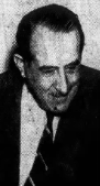
Chet Soda
Yster Charles Soda
Born March 15, 1908 in Oakland
Died March 12, 1989 in Oakland, age 80
For the team’s first year, Chet Soda was the face of Oakland Raider ownership. Through the ties he formed in the construction industry, Soda helped put together the coalition that would acquire the last of the American Football League’s charter franchises. Tension and disagreements among the group appeared almost from the beginning and after that first year, Soda was out, but he remained a major player in the Oakland business and sporting scene for the rest of his working life. While his tenure as Raiders owner was short, his work laid the foundation on which the team would be built at least until the coming of Al Davis.
Early Life and Construction Business
The eldest of the three children of Andrea and Marguerite Soda, Y. Charles Soda was born in Oakland on March 15, 1908. A sister, Mary, came along a year later, and a brother, Stephen, was born in 1912. His father owned and operated a cement and construction business, and following graduation from Fremont High School, Charles joined the business, now named A. Soda and Son.
Through the 1930s and 1940s, the Sodas helped build sidewalks, sewers, and bridges in the East Bay area and grew to be quite prosperous. When Andrea died in 1948, Chet took full ownership of the company. He would be a tireless entrepreneur and administrator his whole life and when he formed H&S Developers, a housing development firm, he grew wealthier still.
By the late 1930s, he had married his wife Helen and they quickly became active in the East Bay social scene. Soda, a Catholic, took part in numerous charitable activities associated with his church and it was probably there where he made the acquaintance of many of the men who would become his partners in the Raiders venture, including Art Beckett, Charles Harney, and Ed McGah.
His interest in the sporting life started to make its appearance in the public sphere after the war. In 1948 he served a one-year stint as president of the Metropolitan Club of Oakland, a group that promoted local sports. He also owned a 2,500-acre ranch in the Hayward Hills where he and Helen bred racehorses and in 1955, he was named a director of the Golden Gate Fields racetrack in Berkeley.
Raiders Owner and General Manager
So, when the opportunity came to pursue an American Football League team for Oakland, Soda was a natural fit. He, Robert Osborne, and Wayne Valley, led the effort forming the eight-man coalition that was awarded the league’s last franchise. Soda was named team president and faced the daunting task of hiring coaches and players months after the other teams in the league had begun their efforts. Within days he had hired former St. Mary’s College star Eddie Erdelatz to coach the team and together they began to build a roster.
Soon, though, dissension among the owners began to appear. Art Beckett quietly dropped out in late February and in April, restaurateur Harvey Binns followed suit more noisily, complaining that the parsimony that had served Soda well in his construction business had no place in running a football team. Despite the bickering, the Raiders fielded a competitive team in 1960, going 6-8 and avoiding the cellar that most of the nation’s sports scribes had felt was their due.
Back to Civilian Life
Serious divisions began to be made public in December and by January the league had to step in and adjudicate what the owners couldn’t resolve among themselves. On the 16th a settlement was announced. Soda and four of his fellows would sell their shares in the team to McGah, Osborne, and Valley. In getting out, Soda took a personal loss of about $50,000 and would never again take part in the world of pro football.
He threw himself back in the business of building shopping centers and golf courses and took part in all sorts of civic enterprises. He tried to enter politics running for a spot on the board of the Alameda-Contra Costa Transit District but finished a distant second. Following that he took positions on the board of a number of public ventures including the Oakland Library and Museum Committee, the Alameda County Fair Association, and the Pacific Racing Association. He was named a regent of St. Mary’s College and in the 1970s became a vice president of the Oakland Board of Port Commissioners and the chairman of the California Horse Racing Board. By 1975 he had retired from running his businesses but still held seats on the port commission, racing board, and was president of the St. Mary’s regents.
Late Life and Death
By the end of the decade, now in his 70s, he had stepped back from public life, but began to receive a number of humanitarian awards from the community. In 1983 Helen died. They had had no children together. He remarried, to a woman named Rosemary, but in 1989 he entered the hospital for an unspecified surgical procedure, and soon after, on March 12, died at the age of 80.
1960 Oakland Raiders, general partner
Raiders Career
1960
January 30 - awarded AFL franchise
1961
January 15 - sold share of team


